Europe's space unicorn club is small. It is about to get bigger.
Europe is close to minting another space unicorn. The Exploration Company (TEC), the Franco-German start-up building reusable space capsules, is in talks to raise at least $300m at a valuation of more than $2bn, according to the Financial Times. Brussels' new Scaleup Europe Fund, backed by the European Commission and run by EQT, is lined up as one of the lead investors. If the round closes as described, TEC joins a very short list.
So before TEC arrives, here is who is already in the club, what they do, how much they have raised, and who is backing them.
ICEYE
HQ: Helsinki, Finland
Founders: Rafal Modrzewski and Pekka Laurila (2014)
What it does: ICEYE builds and flies the world's largest commercial constellation of synthetic aperture radar satellites. Radar sees through cloud and darkness, so it can image any point on Earth day or night, in any weather. That makes it valuable for two fast-growing markets: insurance and disaster response, where it maps floods and storm damage, and defence and intelligence, where governments buy its imagery and, increasingly, whole satellites. The business is well beyond start-up scale, with more than €250m in revenue in 2025, over €100m in EBITDA, and a contracted backlog above €1.5bn.
How much has it raised: Roughly $1.2bn to date. Its 2026 Series F brought in €450m, part of a wider €1bn round including a secondary sale, at a valuation of around €10bn, making ICEYE one of only two decacorns in European space. The latest round was led by General Atlantic, with earlier rounds led by General Catalyst. Other backers include Nokia, the Qatar Investment Authority, TCV, Finnish state investors Solidium and Tesi, pension funds Varma and Ilmarinen, and early backer Lifeline Ventures.
Isar Aerospace
HQ: Munich, Germany
Founders: Daniel Metzler, Josef Fleischmann and Markus Brandl (2018)
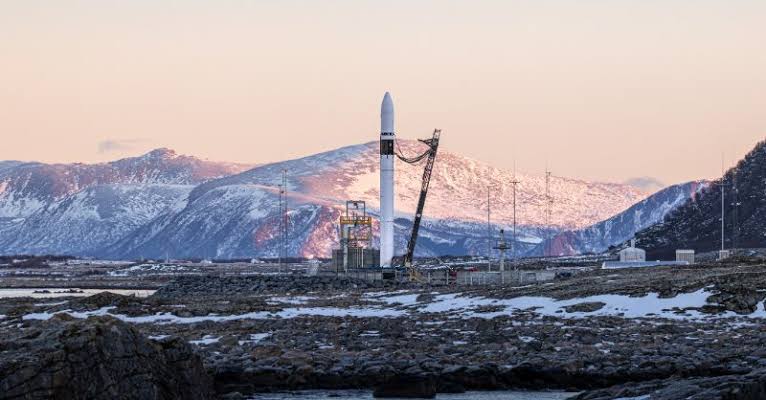
What it does: Spun out of the Technical University of Munich, Isar is Europe's best-funded private rocket company. It is building Spectrum, a small-to-medium launch vehicle designed to carry satellites to orbit without relying on American or Russian rockets. That pitch, sovereign European access to space, has grown far more compelling since the war in Ukraine and the wobble in transatlantic relations.
How much has it raised: North of $900m across venture rounds, grants and other financing, making it the most capitalised independent launch company in the EU. It crossed into unicorn territory in 2025 with a €150m convertible deal led by Eldridge Industries, the US firm chaired by Chelsea co-owner Todd Boehly, then added a €270m Series D in 2026. The Series D brought in Island Green Capital and Molten Ventures alongside existing investors HV Capital, Lakestar and UVC Partners, with KfW Capital co-investing. Earlier rounds drew Porsche SE, Earlybird, Lombard Odier, Bayern Kapital and Vsquared.
Czechoslovak Group
HQ: Prague, Czechia
Founders: Jaroslav Strnad (2014), now controlled by his son Michal Strnad
What it does: Some trackers, including Dealroom, count a second space decacorn in Czechoslovak Group (CSG). The asterisk is that CSG is really a defence and industrial conglomerate, spanning ammunition, vehicles and aerospace, rather than a New Space start-up in the mould of ICEYE or Isar. It belongs in the picture because it shows how blurred the line between space and defence has become in Europe, and how much of the money now flowing into the sector is really about sovereignty and security. Readers should treat it as a different kind of animal.
How much has it raised: CSG grew largely through acquisitions rather than venture rounds. It floated on Euronext Amsterdam in January 2026 at a valuation of around €25bn, briefly topping €30bn in early trading, raising €3.8bn in gross proceeds including €750m of new shares.
The next in line
Behind these names sits a cluster of companies knocking on the door, the ones investors expect to reach a billion next. Spain's PLD Space, another launch challenger, raised a $198m Series C in 2026 led by Mitsubishi Electric. Italy's D-Orbit, which handles in-orbit logistics and satellite delivery, and Bulgaria's EnduroSat, a fast-growing satellite manufacturer backed by Founders Fund and GV, are both scaling quickly. None are unicorns yet, but the pipeline is deeper than it was even a year ago.
That is the backdrop to the TEC deal. Europe's space unicorn club has gone from a curiosity to a genuine cohort in a couple of years, driven by a mix of defence spending, a push for strategic independence, and public money like the Scaleup Europe Fund stepping in alongside private capital. The Exploration Company will not be the last name added to this list. It may not even be the last this year.